
Achieving compliance with acoustic standards does not require over-engineering every partition wall or overspending on boutique materials. Whether meeting the Apparent Sound Transmission Class (ASTC) requirement of 47 under Section 9.11 of the BC Building Code or controlling noise transfer in commercial fit-outs, budget optimization comes down to strategic material selection and precise structural detailing.
Developers, general contractors, and property owners across British Columbia can deliver high-performance sound isolation while maintaining clear project budgets by adopting value-engineered wall and ceiling assemblies.
1. Optimize Wall Geometry with Light Gauge Steel Framing
One of the most cost-effective ways to increase Sound Transmission Class (STC) ratings without ballooning material expenses is selecting the right framing layout.
- Thinner Gauge, Flexible Steel: Light gauge steel studs naturally flex under acoustic pressure, decoupling the two sides of a wall better than rigid wood studs. Utilizing 25-gauge or 20-gauge steel studs can increase an assembly’s STC rating by 3 to 5 points compared to standard wood studs using the same drywall layers.
- Wider Stud Spacing: Increasing stud spacing from 16 inches on-center to 24 inches on-center reduces the number of structural contact points across the wall. This minor framing modification lowers material costs while simultaneously reducing sound vibration transfer across the partition.
- Single vs. Double Stud Configurations: While double-stud framing provides high acoustic separation, staggered-stud or single-stud assemblies paired with resilient channels often achieve necessary ASTC target thresholds at a fraction of the framing footprint and labor cost.
2. Standardize High-Density Batt Insulation
High-cost acoustic products like specialized dampening membranes or thick sound-deadening boards are often unnecessary when standard cavity insulation is correctly specified.
- Mineral Wool vs. Fiberglass: Uninsulated cavities create resonance chambers that degrade wall performance. Filling stud bays with mineral wool batts or high-density fiberglass batts absorbs airborne sound energy effectively. Mineral wool provides dense sound absorption along with inherent fire-resistance properties, offering high value per dollar.
- Full Cavity Fill Efficiency: Ensure batt insulation fits snugly without gaps or extreme compression. Leaving even 10% of a cavity uninsulated allows acoustic energy to bypass the assembly, diminishing overall efficiency.
3. Leverage Dual-Layer Drywall and Resilient Channels
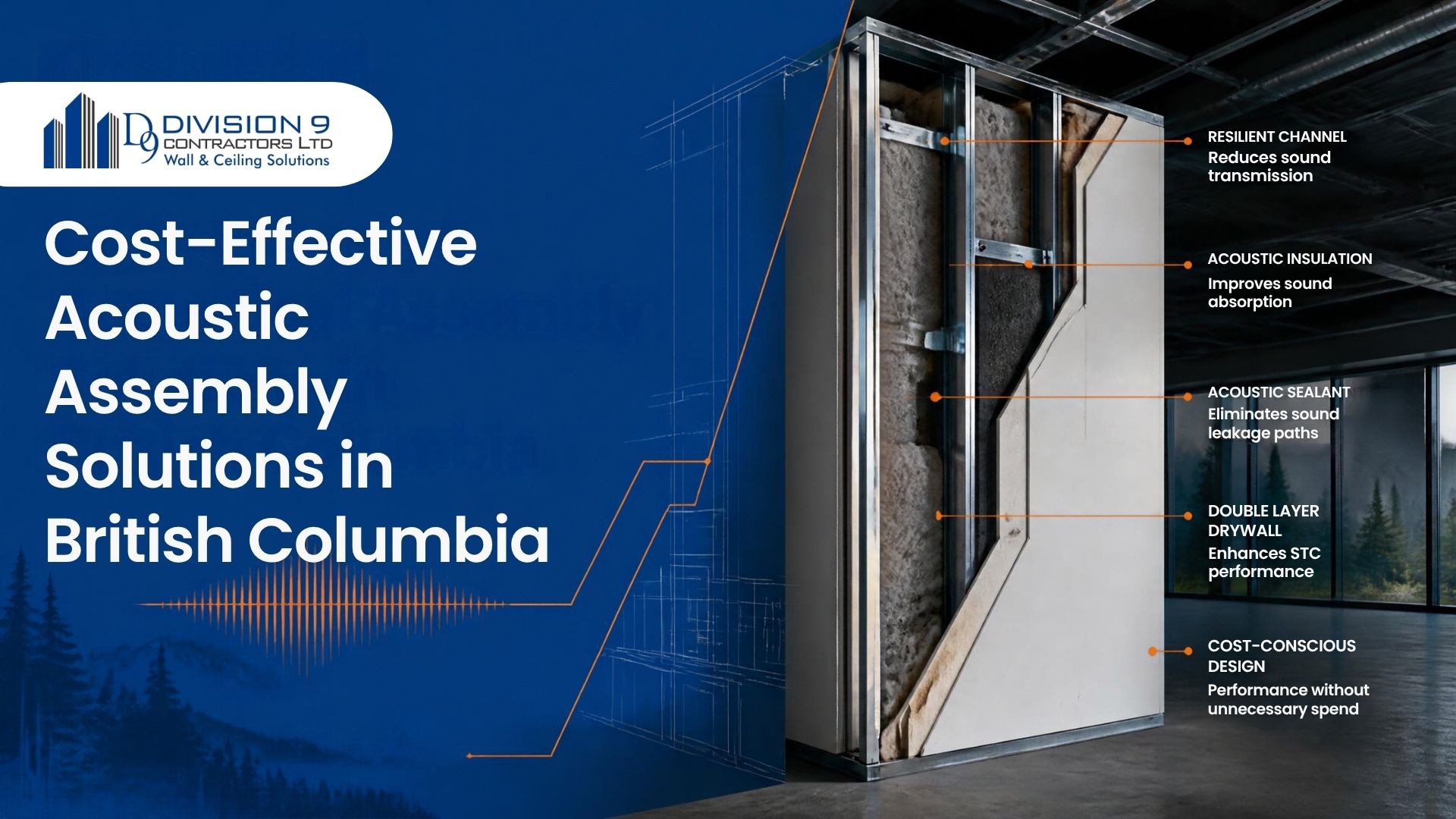
Rather than purchasing expensive specialty soundproof drywall panels, combining standard gypsum board layers with economical acoustic hardware yields superior results at a lower cost per square foot.
- Layered Gypsum Board: Installing two layers of standard 5/8-inch Type X drywall on one or both sides of a partition adds essential mass for blocking airborne noise. Standard drywall is readily available, simple to trade-install, and far less expensive than composite soundproofing sheets.
- Resilient Channels (RC-1): Fastening horizontal metal resilient channels to steel or wood studs before attaching drywall decouples the gypsum board from the primary structure. This low-cost hardware addition breaks vibrational energy pathways, significantly elevating the assembly’s overall performance.
4. Eliminate Flanking Paths to Avoid Costly Rework
A soundproofing assembly is only as strong as its weakest seal. Overlooking perimeter air leaks or structural flanking paths leads to failed acoustic tests, resulting in expensive tearing down and rebuilding of completed walls.
- Continuous Acoustical Sealant: Applying non-hardening acoustical sealant along top and bottom runner tracks, corner junctions, and gypsum board perimeters ensures airtight isolation. Acoustic sealant is one of the lowest-cost building materials on a job site, yet it protects against severe sound leakage.
- Staggered Penetrations: Offsetting electrical outlets, switch boxes, and pipe penetrations by at least one stud bay prevents direct sound paths through walls without adding material costs.
- Flanking Control at Slabs: Stopping interior drywall layers at structural slab junctions—rather than running drywall continuously across floor or ceiling joints—prevents sound from flanking around party walls.
Value Engineering Matrix for BC Assemblies
| Strategy | Performance Target | Cost Impact | Primary Benefit |
| Light Gauge Steel (24″ o/c) | STC 45 – 50 | Low | Natural decoupling; reduces structural contact points |
| Mineral Wool Cavity Fill | Adds 4 – 8 STC Points | Low to Moderate | High-density absorption plus fire protection |
| Resilient Channels + 2x Drywall | STC 50+ / ASTC 47+ | Moderate | Cost-effective structural vibration break |
| Acoustical Sealant & Staggering | Maintains Rated STC | Very Low | Eliminates air gaps and prevents testing failures |
Regional Value-Engineering Support Across BC
Optimizing acoustical budgets across British Columbia requires understanding local building practices and material supply chains:
- Lower Mainland High-Rises (Vancouver, Burnaby, Richmond, Coquitlam): Steel stud partition walls paired with acoustic drop ceilings allow commercial office fit-outs to meet strict tenant privacy rules without heavy structural additions.
- Multi-Family & Rental Development (Surrey, Langley, Abbotsford, Delta): Prescriptive ASTC 47 and STC 50 wall assemblies enable multi-family builders to pass municipal inspections smoothly while controlling framing and drywall material budgets.
- Mixed-Use & Commercial Spaces (Maple Ridge, New Westminster, North Vancouver, West Vancouver, Squamish, Whistler, Chilliwack): Utilizing T-Bar ceiling grid networks with high-NRC drop-in tiles provides acoustic absorption and utility access for tenant spaces at an economical price point.
Complete Drywall and Acoustic Assembly Contractors
Division9 Contractors Ltd delivers value-engineered acoustic assemblies, structural and light gauge steel framing, high-density insulation, T-Bar ceilings, and precision Level 4 and Level 5 drywall finishing. We partner with developers, general contractors, and owners to deliver code-compliant, budget-conscious wall and ceiling solutions.
Serving commercial, industrial, institutional, and residential projects throughout Surrey, Vancouver, Burnaby, Richmond, Langley, Coquitlam, Abbotsford, Delta, Maple Ridge, New Westminster, North Vancouver, West Vancouver, Squamish, Whistler, and Chilliwack.