
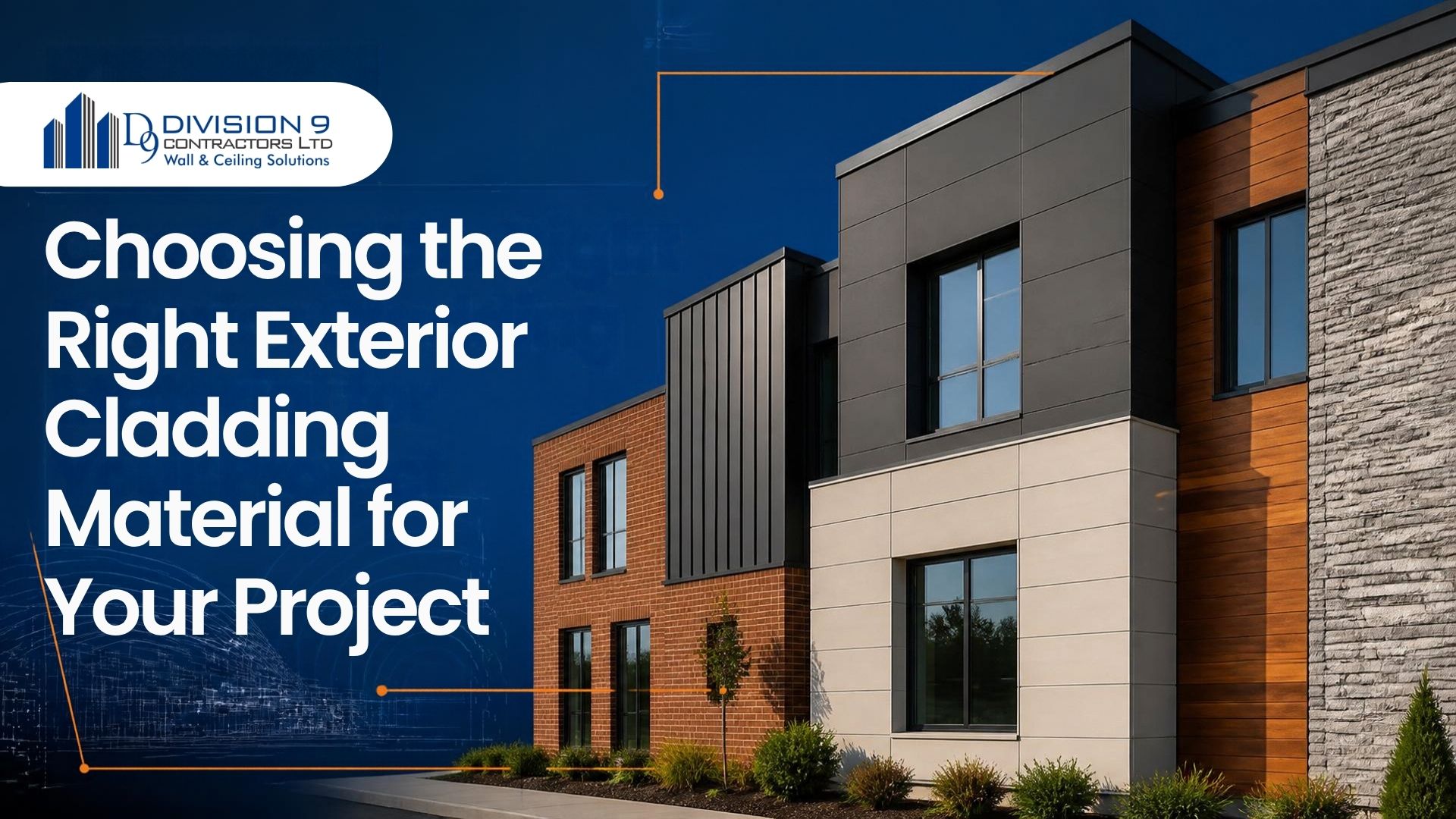
Selecting the right exterior cladding material is one of the most critical decisions in commercial and residential construction across British Columbia. Cladding serves as a building’s primary defense against coastal rain, wind-driven moisture, and thermal shifts, while defining its visual architectural style.
When evaluating materials for projects in the Lower Mainland, Fraser Valley, and Sea-to-Sky corridor, developers and homeowners must weigh long-term durability, moisture management, maintenance requirements, and overall installed costs.
Key Performance Factors for BC Climates
British Columbia’s coastal and mountainous climate zones present unique envelope challenges:
- Rainscreen Performance: High annual rainfall in cities like Vancouver, North Vancouver, and Squamish requires cladding systems that easily integrate into ventilated rainscreen assemblies to facilitate drainage and drying.
- Thermal Expansion & Freeze-Thaw: Areas with high freeze-thaw cycles (such as Whistler or Chilliwack) require materials that resist cracking, shrinking, or delaminating under drastic temperature swings.
- Fire Resistance (WUI): Projects near forested areas or meeting strict building codes require non-combustible exterior cladding rated for wildland-urban interface protection.
Top Exterior Cladding Options Compared
1. Fiber Cement Siding & Panels
Fiber cement (such as HardiePlank or architectural fiber cement panels) is composed of cement, sand, and cellulose fibers.
- Pros: Highly durable, non-combustible, rot-resistant, and resistant to pests. Available in pre-finished lap siding, panel formats, or board-and-batten profiles.
- Cons: Heavier material requiring specialized cutting tools and proper sealing at all field-cut edges during installation.
- Best For: Modern residential homes, multi-family developments, and commercial properties across Surrey, Burnaby, and Langley.
2. Metal Cladding (Steel & Aluminum)
Light gauge architectural metal panels, corrugated steel sheets, and aluminum composite panels (ACP) offer sleek contemporary aesthetics.
- Pros: Exceptionally long lifespan, 100% non-combustible, lightweight, and requires virtually zero maintenance. Excellent for modern architectural accents.
- Cons: Higher upfront material cost and vulnerable to denting if impacted by heavy equipment at ground level.
- Best For: Commercial office buildings, industrial spaces, institutional builds, and modern high-end residential feature walls.
3. Natural Wood Siding (Cedar & Fir)
Western Red Cedar and Douglas Fir provide timeless West Coast warmth and natural biophilic beauty.
- Pros: Unmatched natural aesthetic, renewable resource, and easy to cut and customize on site.
- Cons: Requires ongoing maintenance (staining, painting, or sealing every 3 to 5 years) to prevent moisture rot, UV graying, and insect damage. Combustible unless treated with fire-retardant coatings.
- Best For: High-end custom homes, resort chalets in Whistler, and architectural accent soffits.
4. Vinyl Siding
Polyvinyl chloride (PVC) exterior siding remains a budget-friendly option for residential developments.
- Pros: Low initial cost, lightweight, quick installation, and never requires painting.
- Cons: Prone to cracking in extreme cold, melting near intense heat sources (such as reflected sunlight from low-E windows), and offers lower impact resistance.
- Best For: Entry-level single-family homes, suburban renovations, and budget-conscious multi-family projects.
Material Comparison Matrix
| Cladding Material | Durability / Lifespan | Fire Resistance | Maintenance Level | Relative Installed Cost |
| Fiber Cement | 30 – 50 Years | Non-Combustible | Low (Repaint every 12–15 yrs) | Moderate |
| Architectural Metal | 40 – 60+ Years | Non-Combustible | Very Low | Moderate to High |
| Natural Cedar | 20 – 40 Years | Combustible (Untreated) | High (Restain every 3–5 yrs) | High |
| Vinyl Siding | 20 – 30 Years | Combustible / Melts | Very Low | Low |
Integrating Cladding with Steel Stud Framing & Wall Assemblies
A cladding material is only as effective as the backup wall structure behind it. For commercial tenant fit-outs, multi-family buildings, and custom residential envelopes, modern wall assemblies rely on a complete system approach:
- Precision Light Gauge Steel Stud Framing: Provides a straight, non-combustible structural plane that prevents exterior wall warping.
- Continuous Batt or Spray Insulation: Seals thermal bridges and ensures energy efficiency under the BC Energy Step Code.
- Weather-Resistive Barriers & Rainscreens: Allows moisture that penetrates the outer cladding to drain safely out of the cavity.
- Interior Level 4 or Level 5 Drywall: Delivers smooth, flawless interior surfaces that match high-end exterior architectural design.
Complete Wall Assembly & Framing Solutions
Division9 Contractors Ltd provides professional supply and installation for light gauge steel stud framing, batt insulation, spray foam, acoustical assemblies, T-Bar ceilings, and Level 4 and Level 5 drywall finishing. We partner with general contractors, commercial developers, and project managers to build strong, code-compliant wall systems from the inside out.
We serve commercial, industrial, institutional, and residential projects across Surrey, Vancouver, Burnaby, Richmond, Langley, Coquitlam, Abbotsford, Delta, Maple Ridge, New Westminster, North Vancouver, West Vancouver, Squamish, Whistler, and Chilliwack.